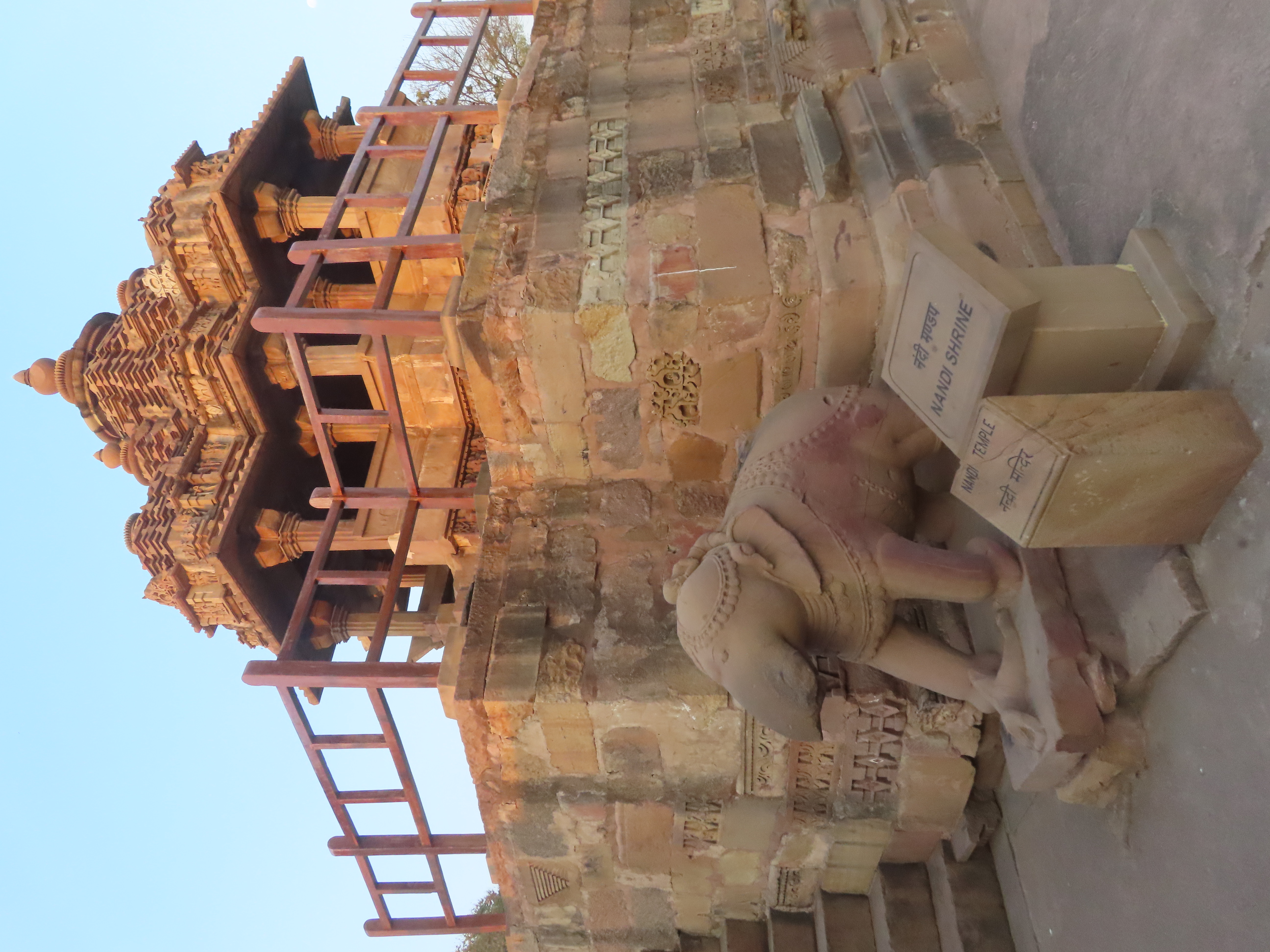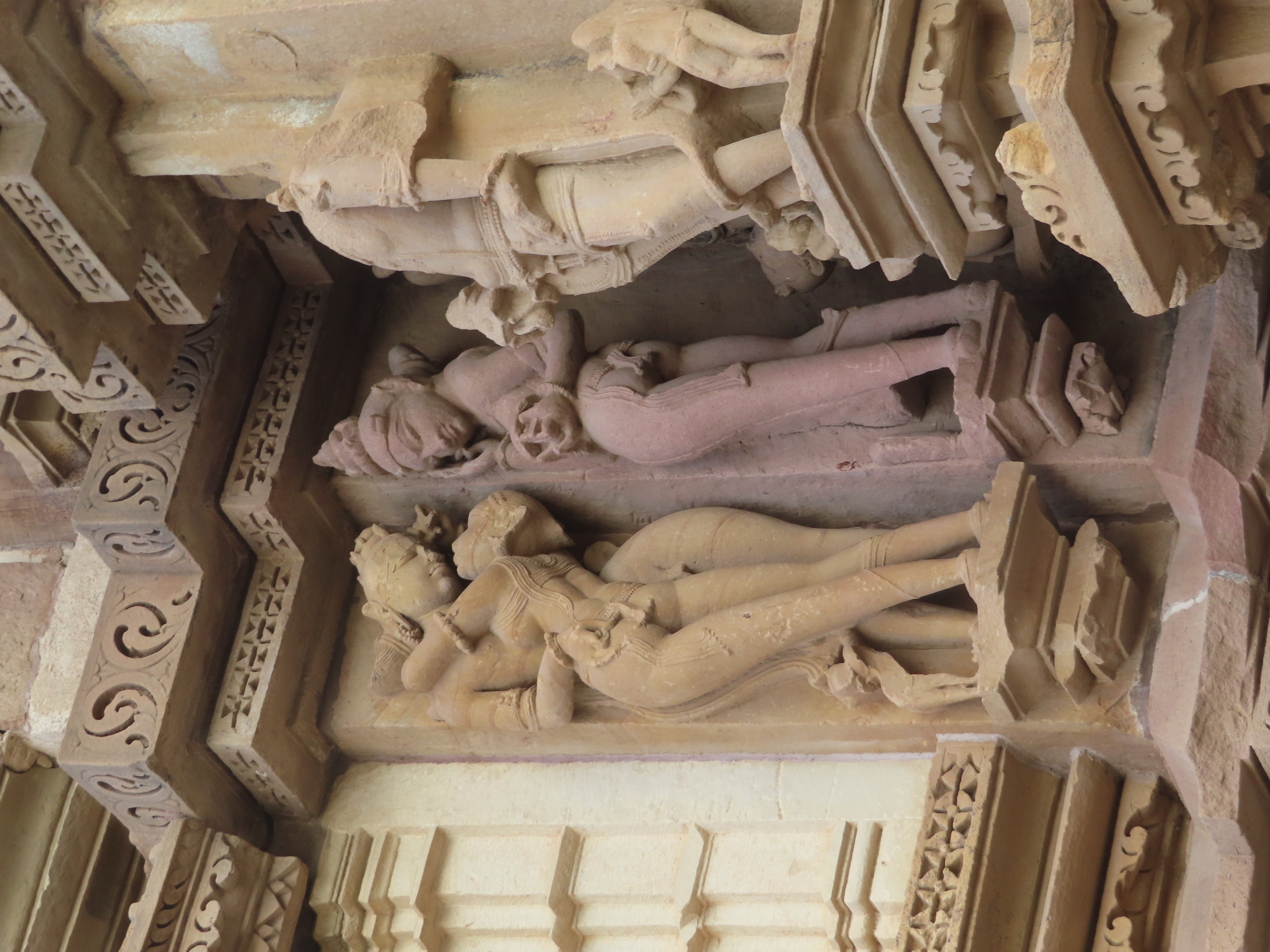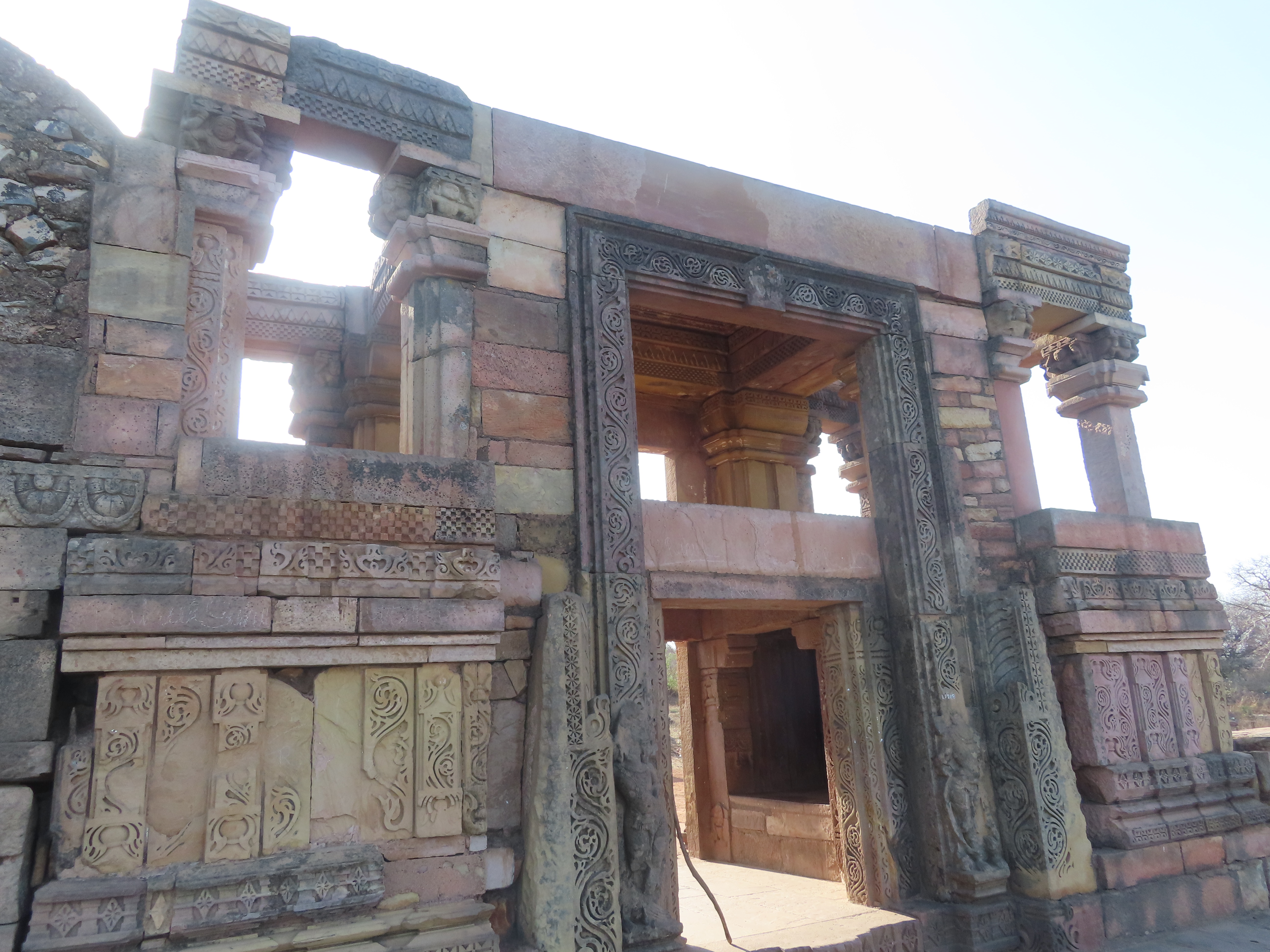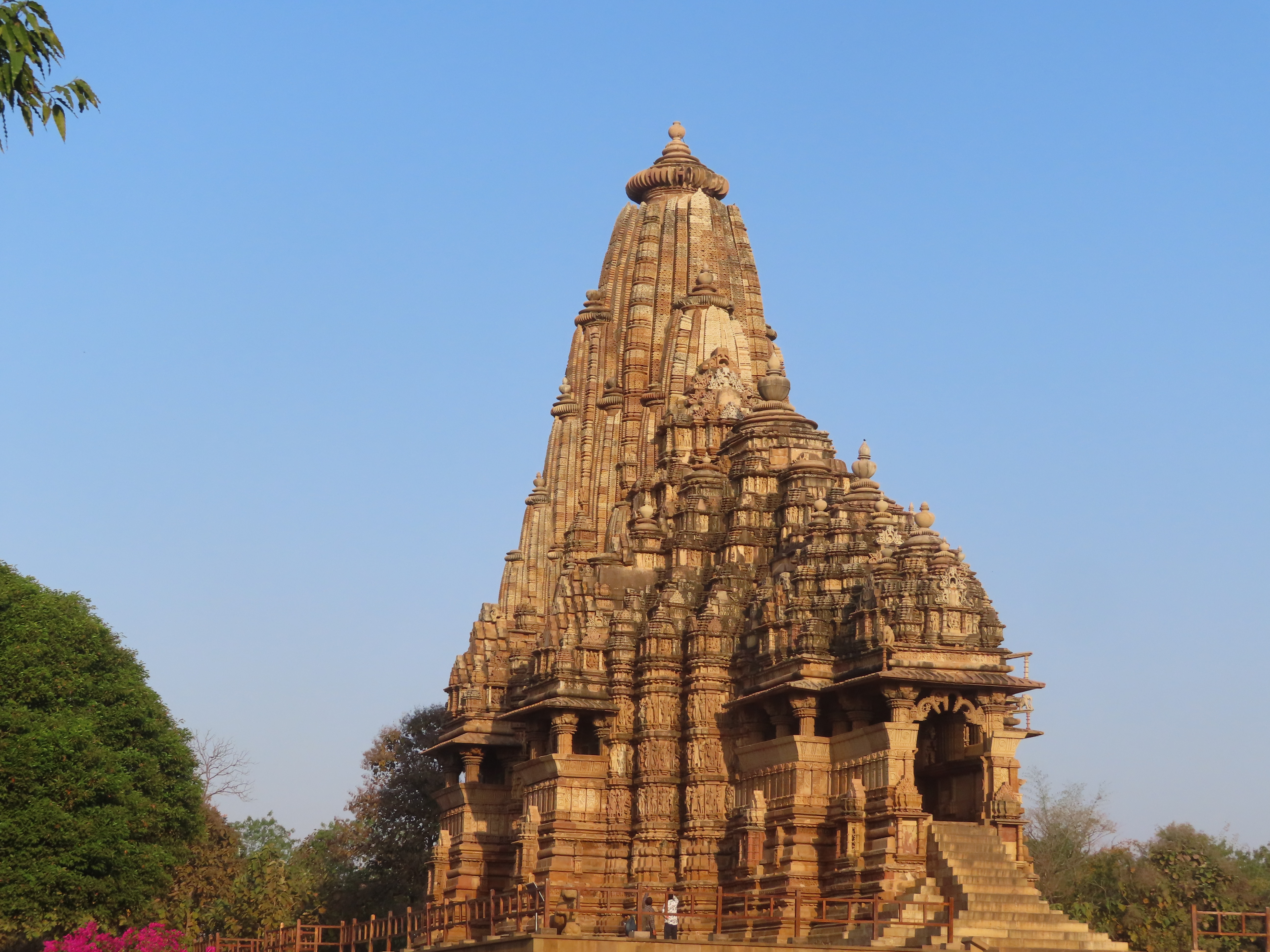
I have been planning a Khajuraho trip for a long time now. After cancelling my Khajuraho trip quite a number of times, I finally planned it during a 3-day Holi break in the first week of March 2026. Saturday and Sunday made it a five-day-long break for me. I booked the Vande Bharat train number 22470 from Nizamuddin railway station. The hotel was also booked, as I always do. Just before two days of my trip, a friend looped in. Nothing much was planned, as I wanted to visit the temples of Khajuraho only.
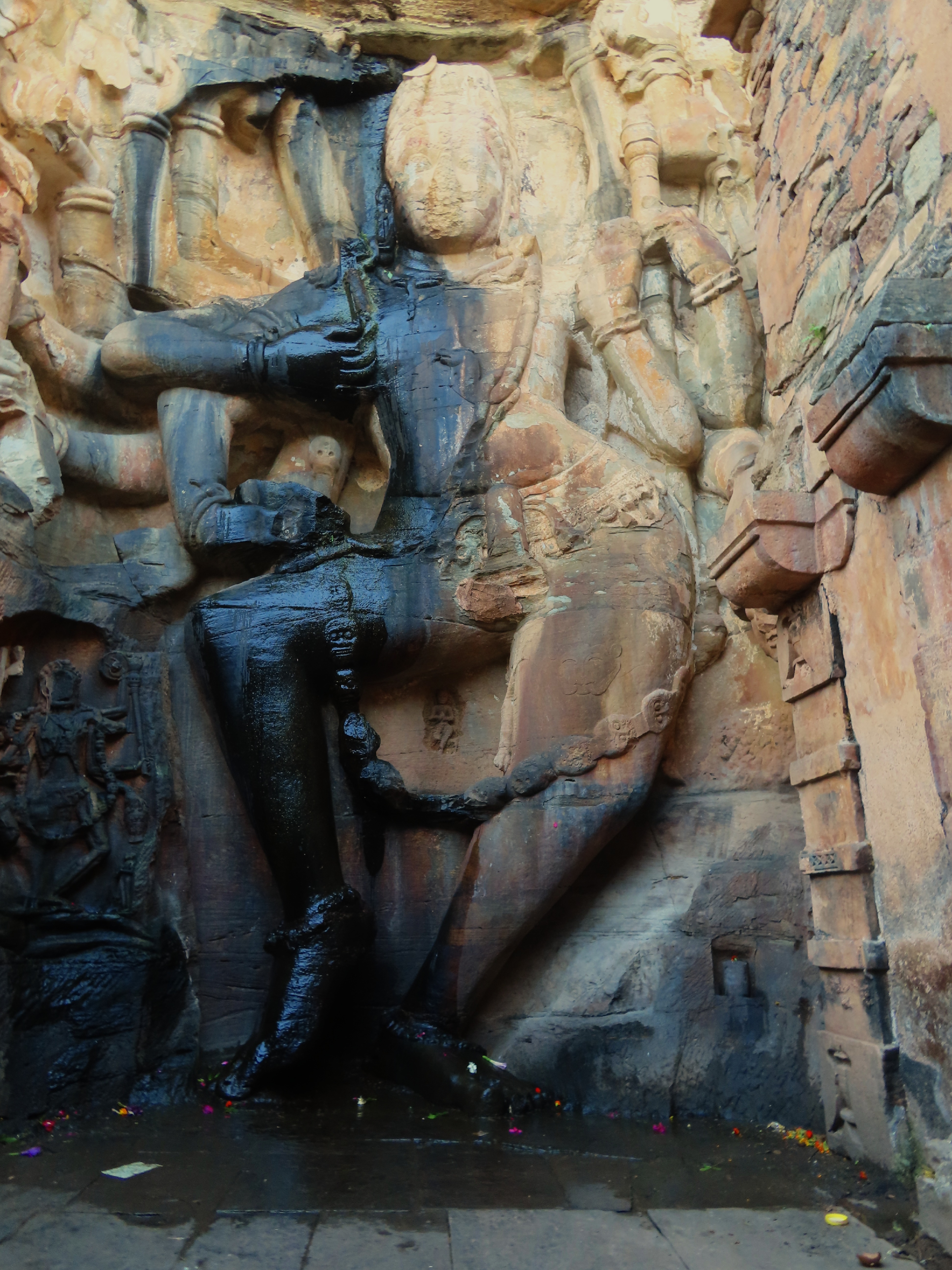
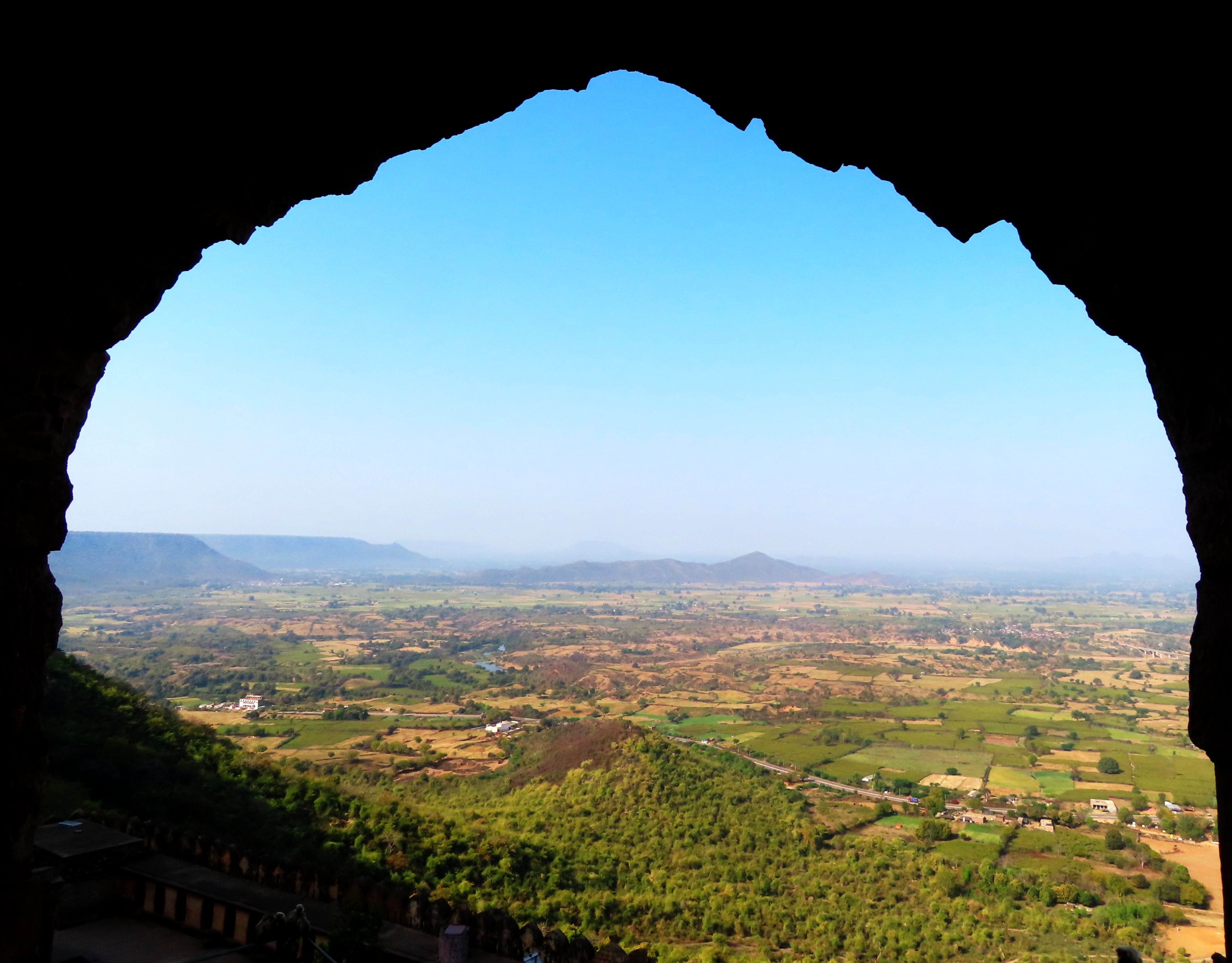
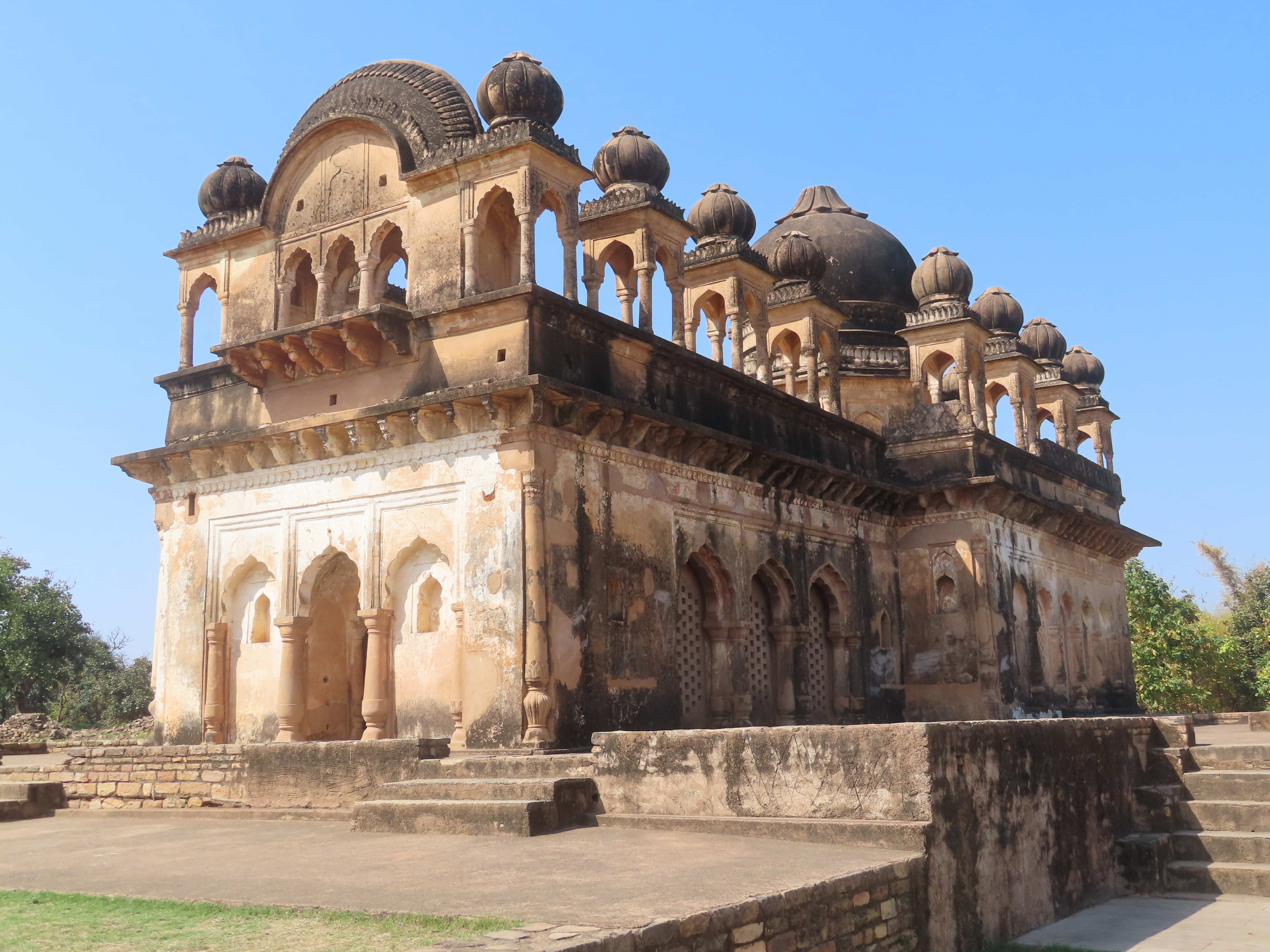
We reached Khajuraho a little before the scheduled time and were able to complete the western group of temples on the same day. As we had a complete day to ourselves, we planned to visit Kalinjar fort the next day. As it is 100 kilometres from Khajuraho, we decided to leave early in the morning. Leaving at 6.30 in the morning, we reached the fort at 8.45 a.m. without taking any major breaks. As it was early March, we could feel a little chill in the weather, the sun was bright, and we knew that it was going to be hot in some time. Kalinjar means the destroyer of time, and the fort is dedicated to Lord Shiva. It is almost 1000 feet high above the surrounding city. The fort is located in the Banda district of Uttar Pradesh. The exact time period of the building of the fort is not known. However, the sculptures in the fort suggest the presence of the Gupta era. The fort was an important stronghold of the Gupta dynasty during Samudra Gupta. The fort has mythological importance as well. It is believed that Lord Shiva drank the Halahal poison in this location, and therefore, the main deity of this fort is Neelkanth Shiva. The fort has its presence in the Ramayana and Mahabharata, as it is believed that both Ram and the Pandavas visited this place during their time of exile. However, the fort was handed over from the Gupta to the Pratihara and then to the Chandela king. Some popular belief is that the fort was built during the Chandela dynasty. The fort is believed to be invincible and has never failed its rulers. The fort again came to notice when Mahmud of Ghazni attacked this fort twice and was defeated both times. Later, Qutbuddin Aibak and Humayun tried to conquer this fort and failed. Finally, in 1569, the Mughal king Akbar won this fort and gifted it to Birbal. Later, the fort came to Bundel King Chhatrashal, and further, it came under the British. The fort is a melting pot of architectural features, starting from the Gupta era through the mediaeval period to British architecture. The main temple is dedicated to Lord Shiva, and there is a massive Kal Bhairav sculpture on the outside wall of the temple. There are 165 steps down to the main garbhagriha of the temple. We climbed down. One has to be careful about the monkeys and the leaf monkeys inside the fort. Though they do not attack the visitors. The fort provides a breathtaking view of the surroundings of Bundelkhand land. After visiting the Shiva temple, we climbed up again and headed for breakfast. There is a small restaurant inside the fort area which served us very tasty parathas. The major part of the fort is now under the thick forest cover. The buildings are scattered, and it is advisable to roam around in the car or on a two-wheeler to various palaces inside the fort to save time and energy. We visited Moti Mahal, which is an antiques store now; Rang Mahal; Rani Mahal; Venkat Bihari temple; Aman Singh Mahal; and Koti-teertha, which is a water reservoir. There are several water reservoirs inside the fort. It took around two hours to visit the palaces and the reservoirs. The water level was quite low in the reservoirs in February. By the time we completed visiting the fort, the sun had become quite hot. We started descending to our next destination, Pandav Falls.
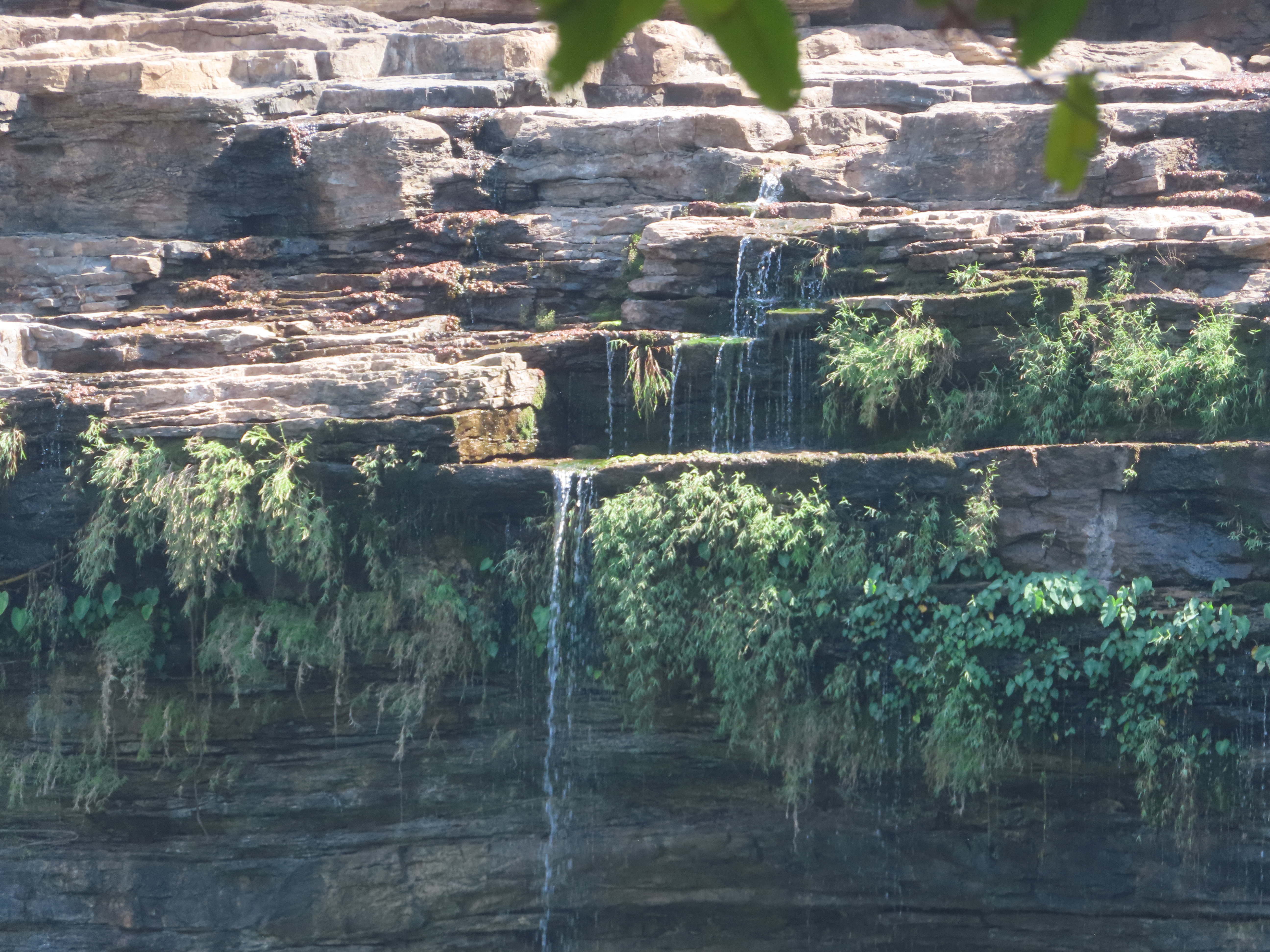
It was a little more than an hour's drive to reach Pandav Falls from Kalinjar Fort. The sun reached a high altitude by the time we reached the entry gate of the Pandav Falls. One needs to again climb down 92 steps to reach the base of the falls. There are several caves at the base of the falls where water cascades through the rock surface above. Pandav Falls is perennial and fed by a tributary of the Panna River. The place is cooler than the surroundings, and there is a sudden silence. One can hear only the sounds of water dripping through the drooping stems and leaves of the creepers. Our guide said not to be surprised if we spot a tiger on our way. This place has mythological connotations as well. It is believed that the Pandavas stayed in these caves during their exile. On September 4, 1929, independence fighter and revolutionary leader Chandrashekhar Azad is claimed to have gathered other revolutionaries here. A bust of Chandrashekhar Azad was also erected here to commemorate the occasion.
As we began the drive back toward the Khajuraho Group of Monuments, the day felt far more fulfilling than we had expected when we first set out in the morning. Kalinjar Fort had revealed layers of mythology, history, and architecture that seemed to echo through centuries, while the quiet beauty of Pandav Falls offered a moment of calm amid the rugged landscape of Bundelkhand. What started as a simple extension to a temple visit had turned into a journey through time itself—where legends of Shiva, stories from the epics, and the footprints of kings and revolutionaries coexist in the same landscape. By the time we reached back, tired but content, it felt as if Kalinjar had quietly lived up to its name—the destroyer of time—reminding us how small a moment our own journeys are in the long flow of history.